

Fire Damage Assessment & Fitness-For-Service - API 579 Part 11
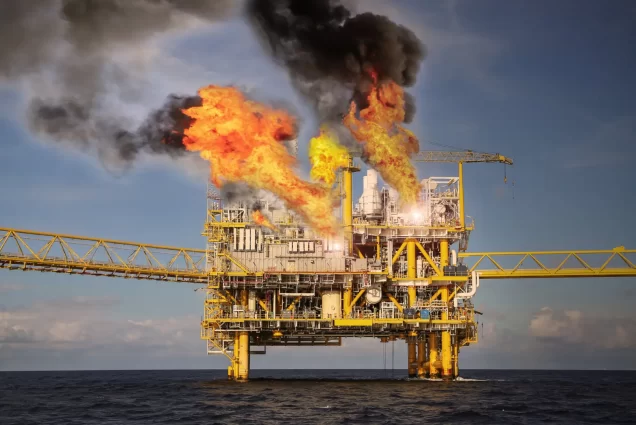
When industrial assets are exposed to fire, direct flame contact, or process overheating, the immediate question is: Is it safe to restart? Or the replace vs repair strategy. Visual inspections alone cannot detect metallurgical degradation or internal stress shifts that occur in high-temperature incidents.
Velosi provides an extensive, systematic framework to evaluate the structural integrity of pressure vessels, piping, and tanks. We help organizations minimize downtime by distinguishing between visual damage and critical structural failure, ensuring that every restart decision delivers efficient yet measurable value. Fully compliant with API 579 Part 11.
What Velosi Offers for API 579 Part 11
Velosi Asset Integrity Limited provides a structured, multi-phase assessment process that combines precision with advanced engineering analysis and digital asset management. Our methodology is built on three pillars: Detailed Heat Zone Mapping and Digital Continuity.
Velosi’s approach goes beyond standard checklists. We provide an end-to-end recovery solution that integrates on-site detailed engineering with advanced numerical modeling, which includes:
- Forensic Heat Zone Mapping: We categorize assets into distinct “Heat Zones” (Zones I-VI) to prioritize inspection efforts, focusing on areas where material properties like yield strength and creep resistance may have been compromised.
- Advanced Material Characterization: Utilizing in-situ Field Metallographic Replication (FMR) and portable hardness testing to identify phase transformations, spheroidization, or micro-cracking in the steel grain structure.
- Integrated Level 1, 2, & 3 Assessments: From rapid conservative screening (Level 1) to complex Finite Element Analysis (Level 3) for high-value assets like reactors or heavy-wall vessels.
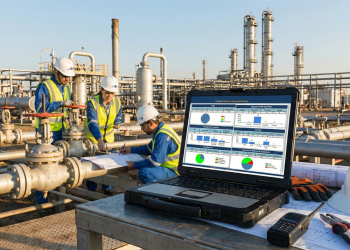
- Digital Integrity Sync: All assessment data, fire-zone photos, and remaining life calculations are integrated into our advanced VAIL-Plant® software, providing a “digital twin” record of the asset’s thermal history for future audits.
- Rerating & Remediation Support: If an asset is found unfit for original conditions, we provide certified engineering for pressure/temperature derating or detailed repair procedures (per ASME PCC-2) to restore integrity.
Key Features
Multidisciplinary Expertise: Integration of Process, Structural, and Metallurgical engineers to assess the "whole-system" impact of a fire.
Systematic Methodology: Rapid Level 1 screening for non-critical damage to clear equipment quickly, paired with Level 2/3 for critical components.
Non-Destructive Focus: Prioritizing advanced NDT (Phased Array UT, Replication) over destructive sampling to maintain asset geometry.
Time-Temperature Modeling: Simulation of the fire's duration and intensity to predict the depth of the "heat-affected zone" within thick-walled components.
Regulatory & Insurance Documentation: Comprehensive FFS reports that satisfy OSHA, HSE, and major insurance underwriters (Loss Adjuster ready).
Strategic Benefits
Accelerated Plant Restart: Drastically reduce Business Interruption (BI) by quickly clearing low-risk assets through validated Level 1 screenings.
Significant CAPEX Savings: Avoid the premature replacement of expensive, long-lead-time equipment (like columns or reactors) by proving safety through Level 3 FEA.
Enhanced Operational Safety: Identify hidden "dead-zones" and localized hot spots that visual inspections miss, preventing catastrophic post-fire leaks.
Audit-Proof Compliance: Ensure full alignment with API 510, 570, and 653, which mandate FFS evaluations after any significant temperature excursion.
Lifecycle Traceability: Maintain a permanent record of the fire's impact within your Asset Integrity Management System (AIMS) for future risk-based inspection (RBI) planning.
Digital Continuity: VAIL-Plant® Integration
Fire damage assessment data does not exist in isolation; it must be integrated into the asset’s lifecycle record. Velosi’s VAIL-Plant® Asset Integrity Management Software ensures that every finding, measurement, and engineering recommendation is captured, tracked, and actionable:
PEMS (Pressurized Equipment Management Software): Enables risk-based inspection planning, remaining life prediction, and corrosion rate tracking for all fire-affected pressure equipment, vessels, tanks, heat exchangers, and piping.
SIMS (Structural Integrity Management Software): SIMS enables risk-based inspection planning and fitness-for-purpose evaluation of onshore and offshore structures in compliance with ISO 19902 and API RP 2SIM.
APMS (Asset Performance Management Software): Provides a consolidated dashboard view of all fire-affected assets, monitoring remnant life, inspection status, risk ranking, corrosion rates, and replacement history.
Lifecycle Tracking: Enables risk-informed maintenance planning and regulatory compliance demonstration.
Case Studies


Insights



-
Consultancy Services for Remaining Life Assessment & Fitness for Service Study
Qatar Fertilizer Company (QAFCO)
Qatar
September 2024
-
Consultancy Services for carrying Fitness for Services and Remaining Life Assessment of Ammonia 1 & 2 Equipment and Structure
Qatar Fertilizer Company (QAFCO)
QATAR
October 2015